🏛️ Fingerprints Reveal Who Created China’s Mysterious Terracotta Army 🇨🇳
📜 An Ancient Mystery Buried for 2,200 Years In 1974, a group of farmers digging a well in Lintong District, near Xi’an,…
Read moreXi'an · Shaanxi · China · 秦始皇帝陵博物院
In 1974, farmers digging a well east of Xi'an struck one of the greatest archaeological finds on earth: the buried army of Emperor Qin Shi Huang, who unified China in 221 BC. Around 8,000 terracotta soldiers, each with a different face, have stood in formation for 2,200 years — and the excavation is still going.
01 · The Army
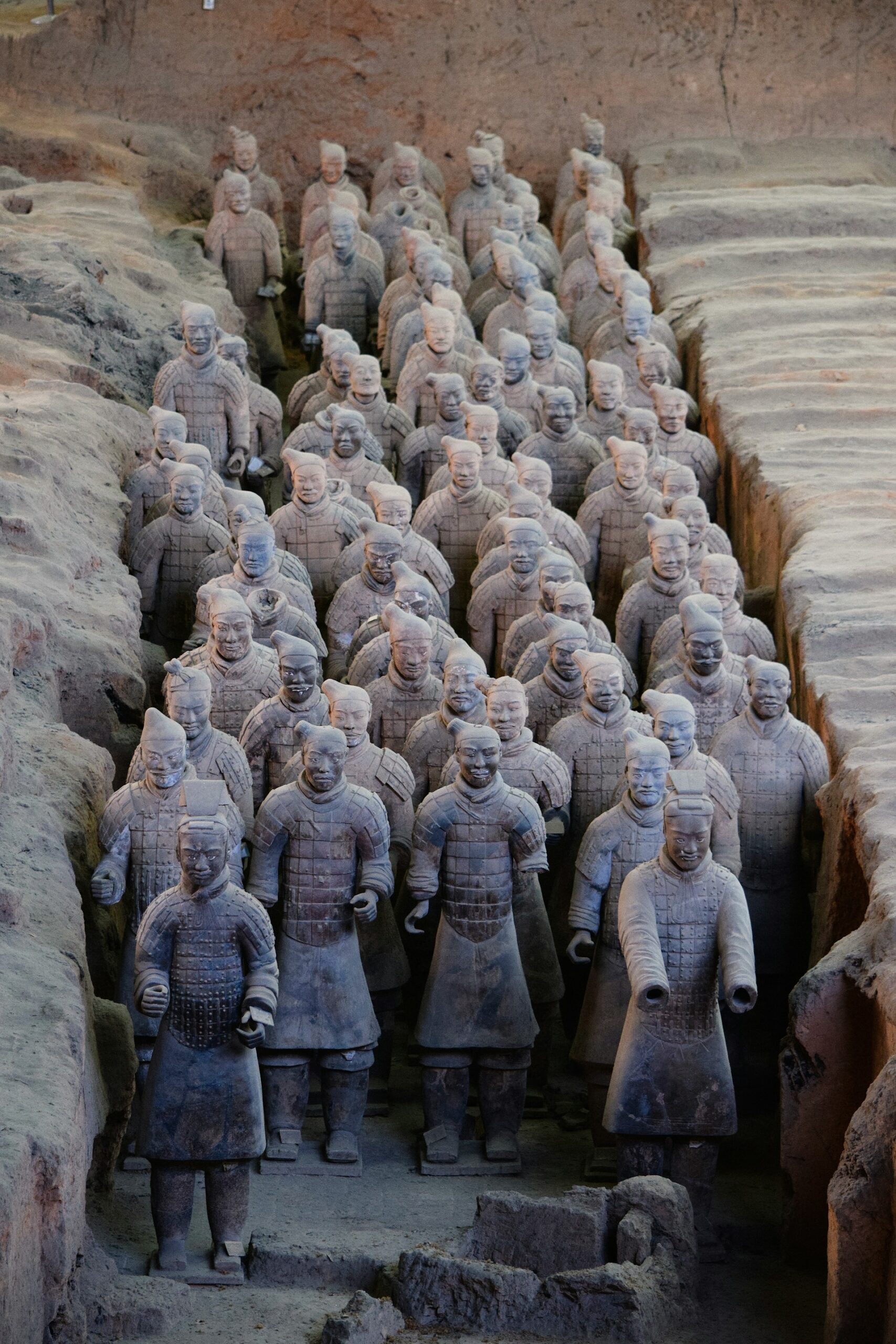
When China's first emperor died in 210 BC, an entire army went with him — not living soldiers, but a kiln-fired replica of his greatest asset, built battalion by battalion in workshops near the capital and buried in pits a kilometer from his tomb. Then the dynasty collapsed, the roof timbers burned, and the whole thing slept under farmland for twenty-two centuries until a shovel went through a warrior's head in 1974.
Today the Emperor Qin Shi Huang's Mausoleum Site Museum protects the find: three excavated pits under vast modern halls, a bronze chariot gallery, and the emperor's own mound still unopened in the distance. It is routinely counted among the greatest museums on earth — and the honest advice that every seasoned traveler repeats is the same: come early, take your time in Pit 1, and bring context, because the story is half the spectacle.
02 · The route
The site is bigger than people expect and the order matters. Drag through the classic visiting sequence — signage shifts with the seasons, so the map on the day always has the final word.
The first gasp
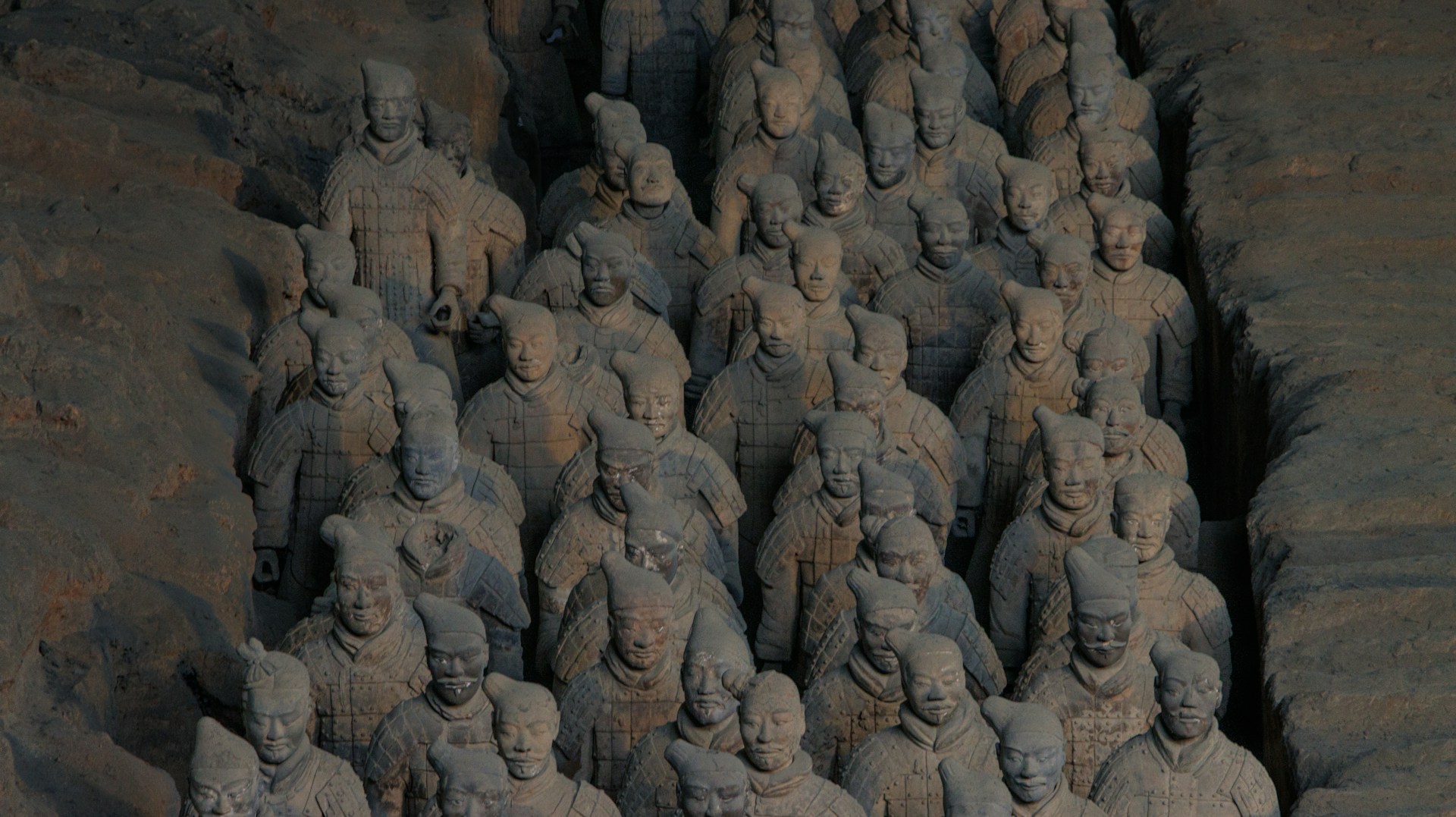
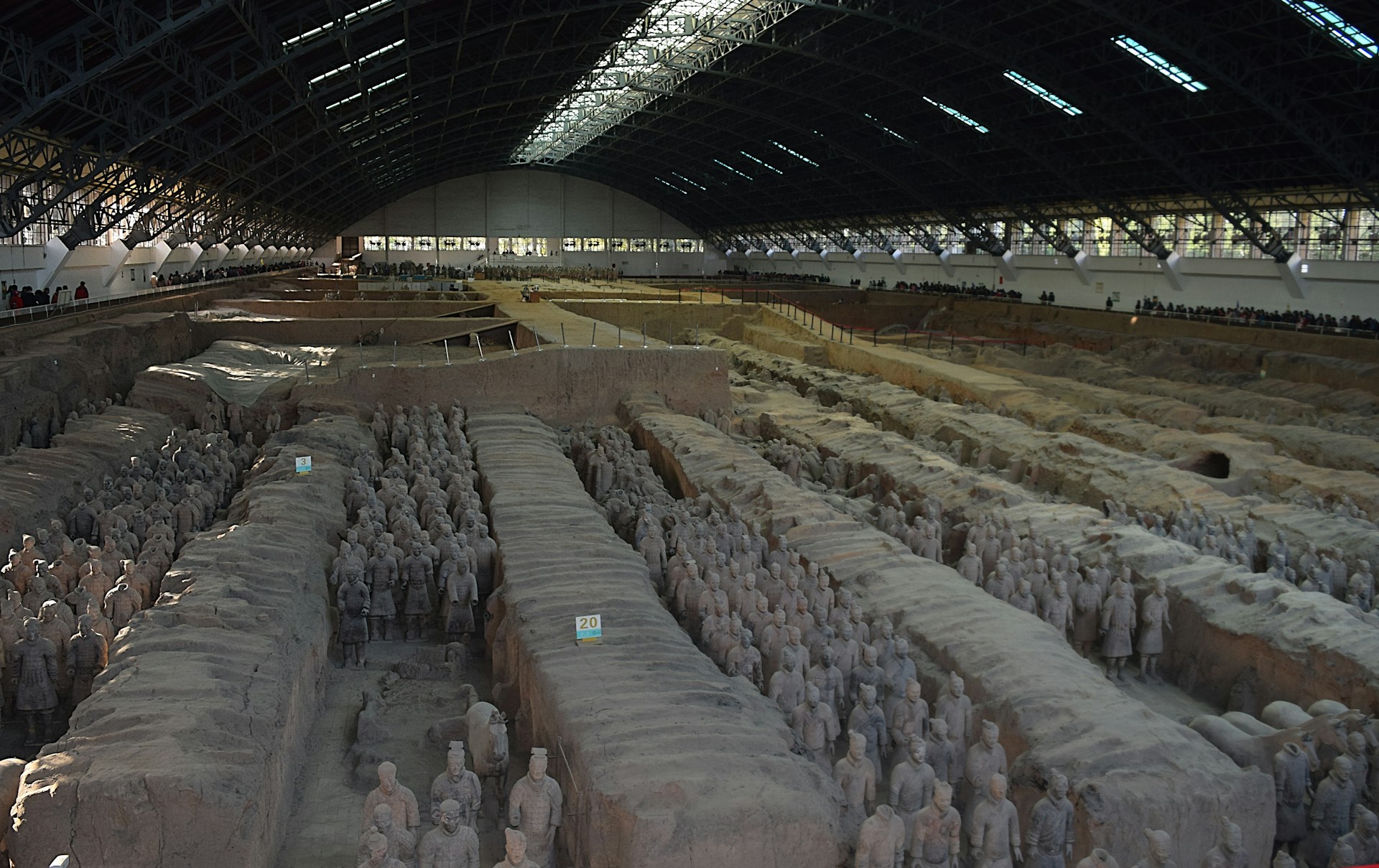
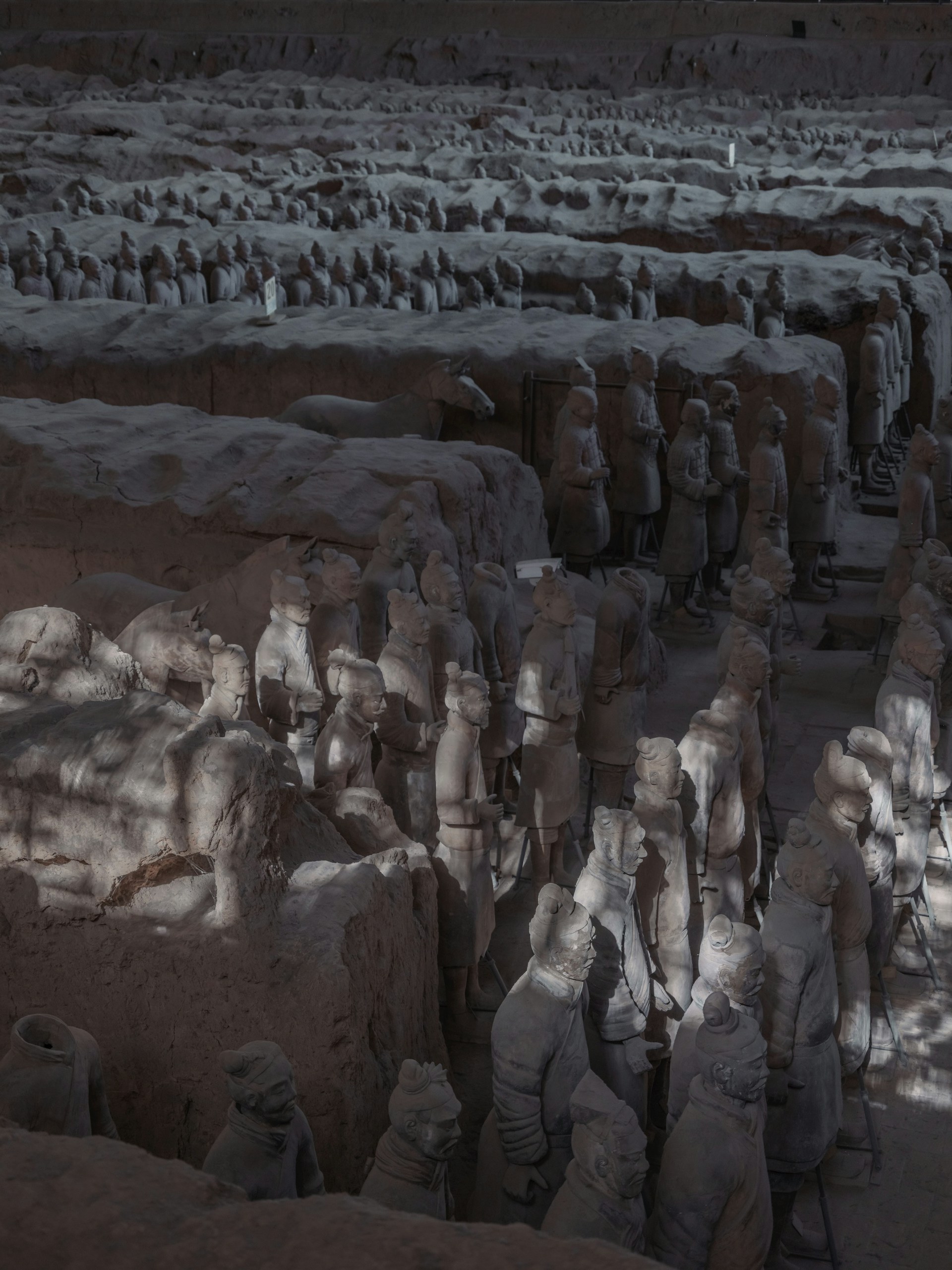
The panorama you came for: 230 meters long, roughly 6,000 figures standing in disciplined ranks under one vaulted roof. Walk the raised corridor slowly — the view from the far end, looking back across the columns, is the photograph everyone travels here for.
Go here first · the east-end view is the classic frame
Drag the dial, tap a stop, or use the ← → arrow keys.
03 · What awaits
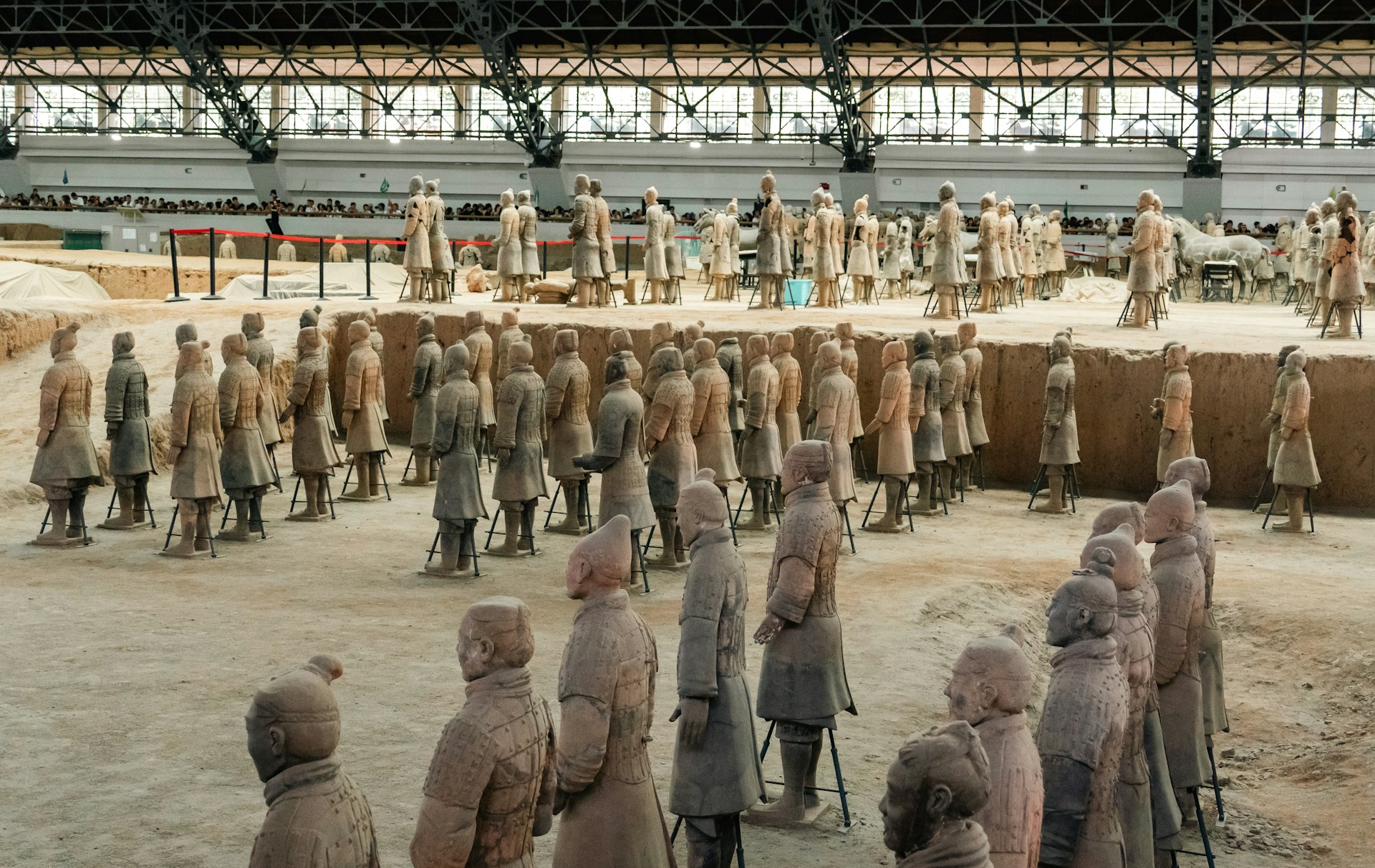
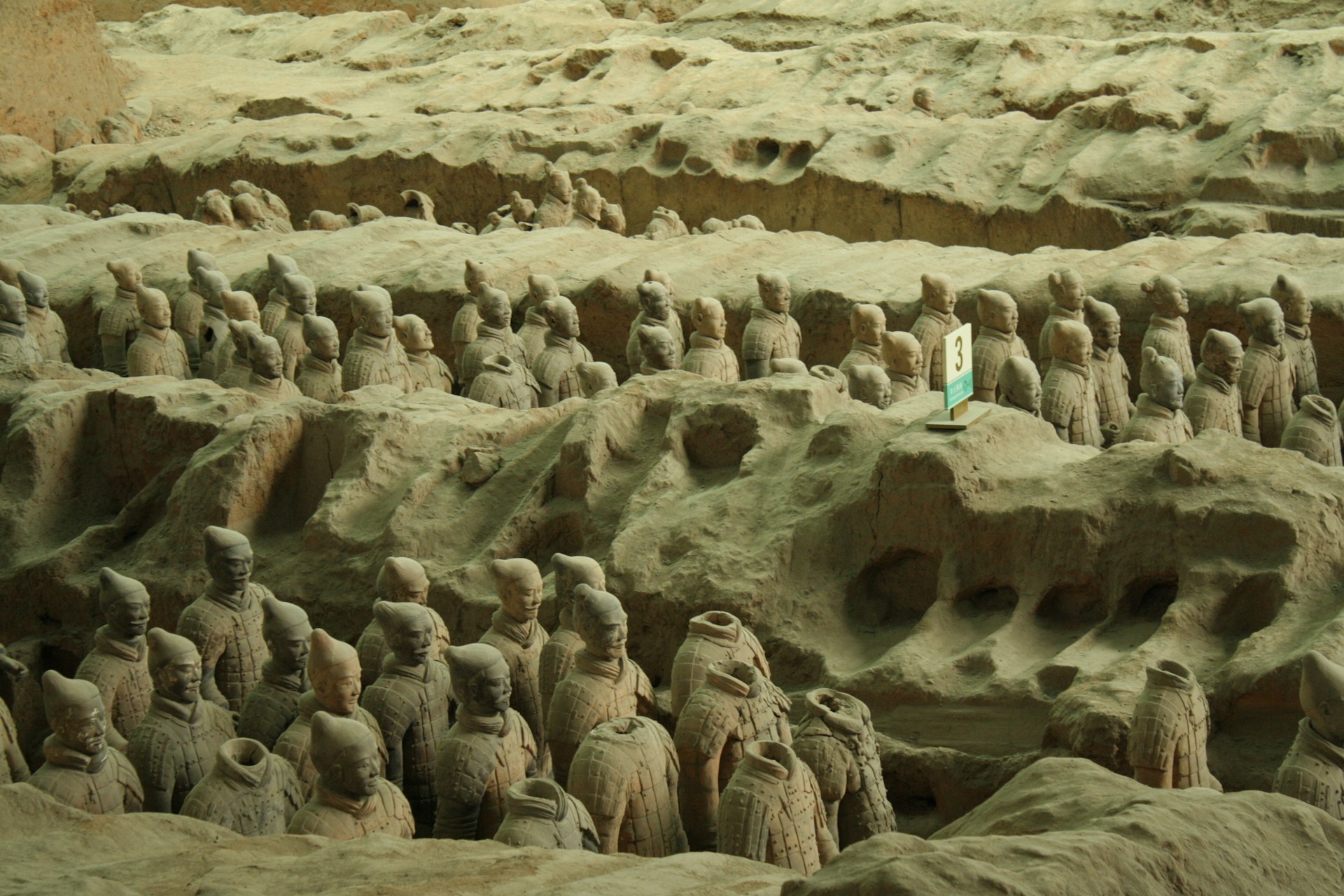
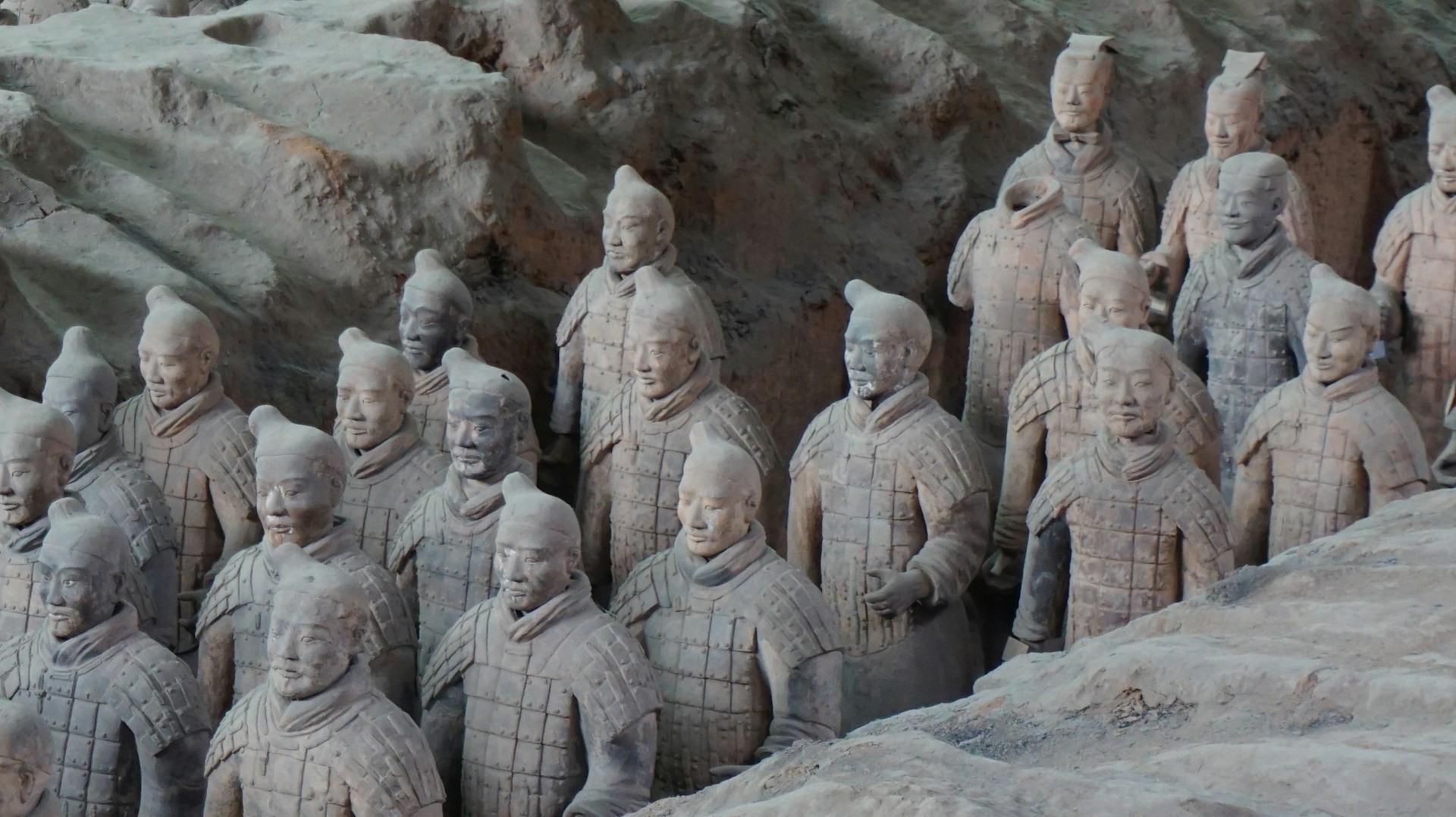
This is the image from every documentary, and it does not disappoint in person: corridors of foot soldiers facing east, chariots drawn by clay horses, and the charred beams that fell on them when the dynasty fell. At the far end, archaeologists still piece shattered figures together — the army is literally still being reassembled as you watch.
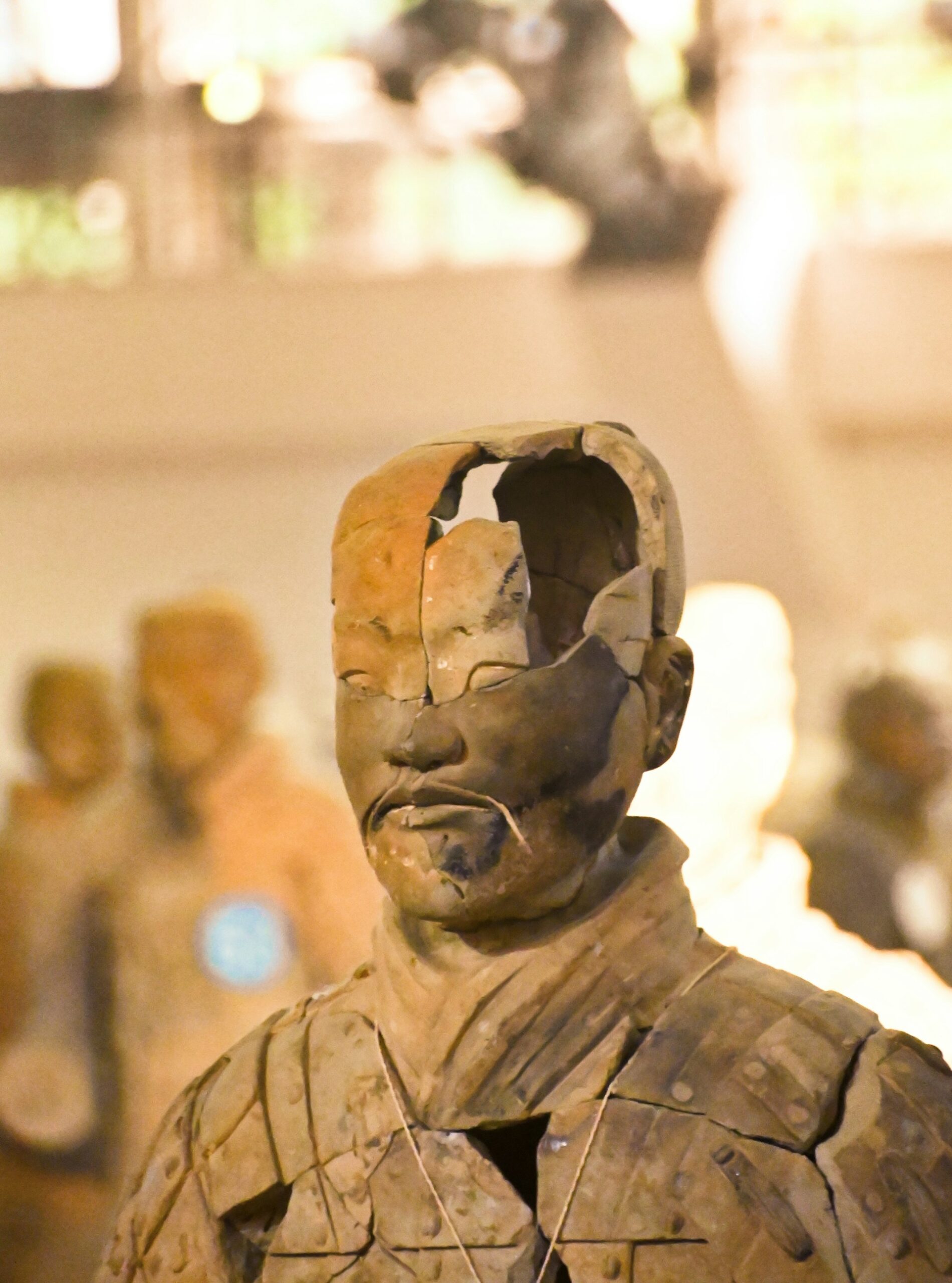
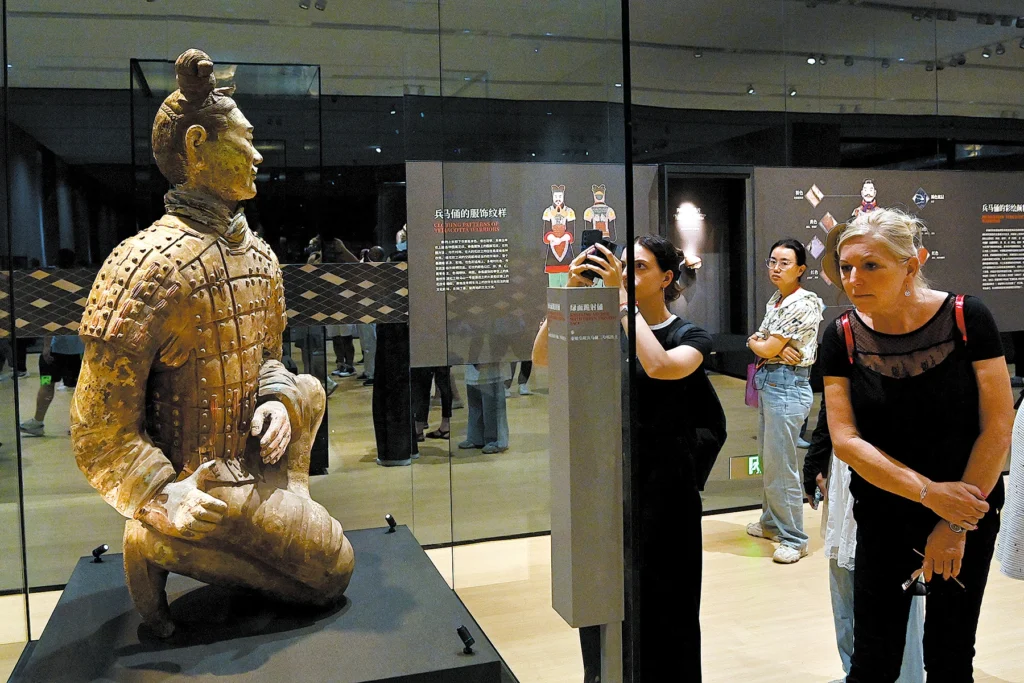
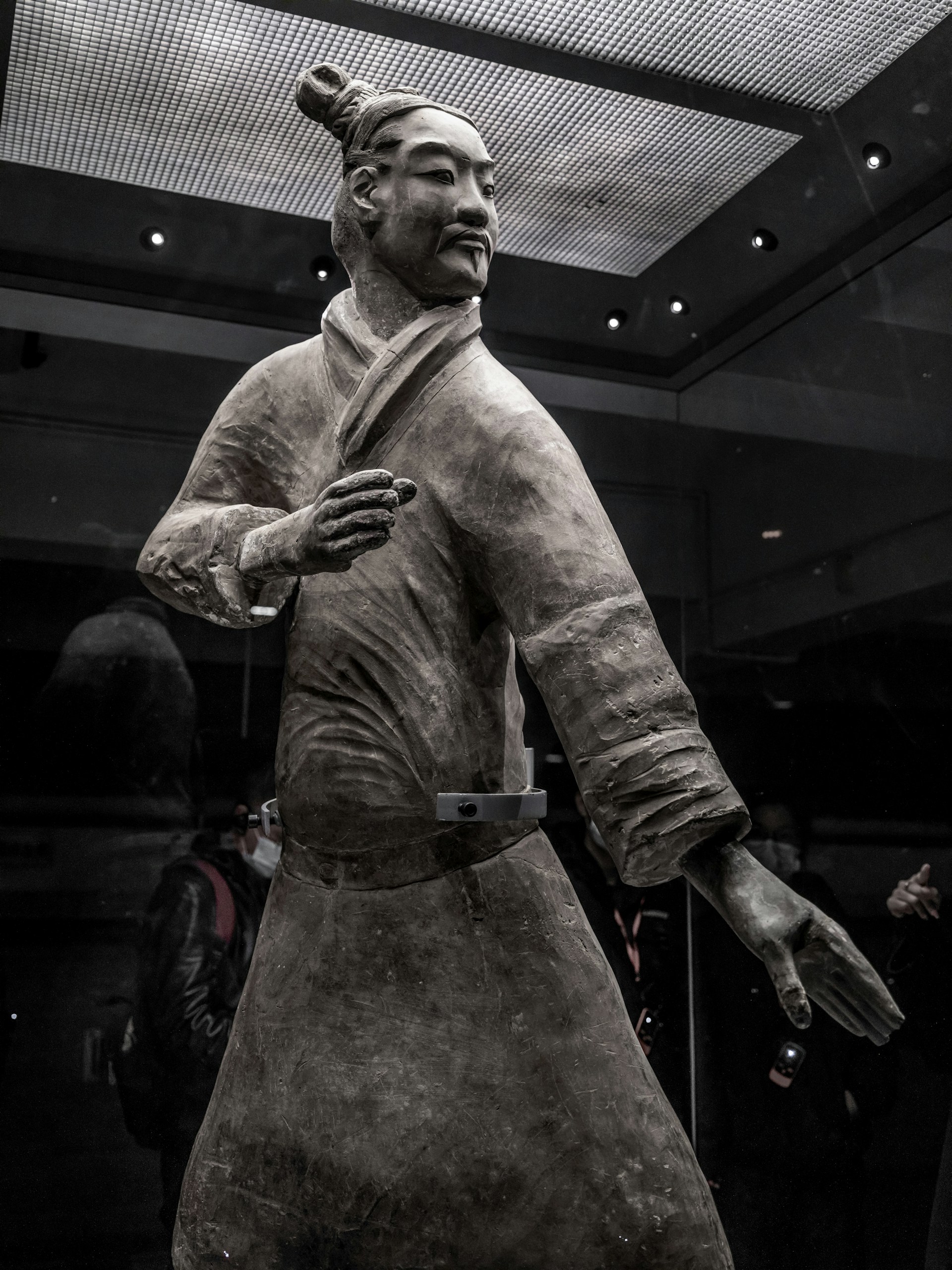
Pit 2 holds the varied arms: cavalry with their horses, archers, chariot crews — and the glass cases where the famous kneeling archer can be studied centimeter by centimeter. Pit 3, the smallest, was the command post: officers around a war chariot, rooms left looking mid-meeting. Together they explain what Pit 1 only shows.
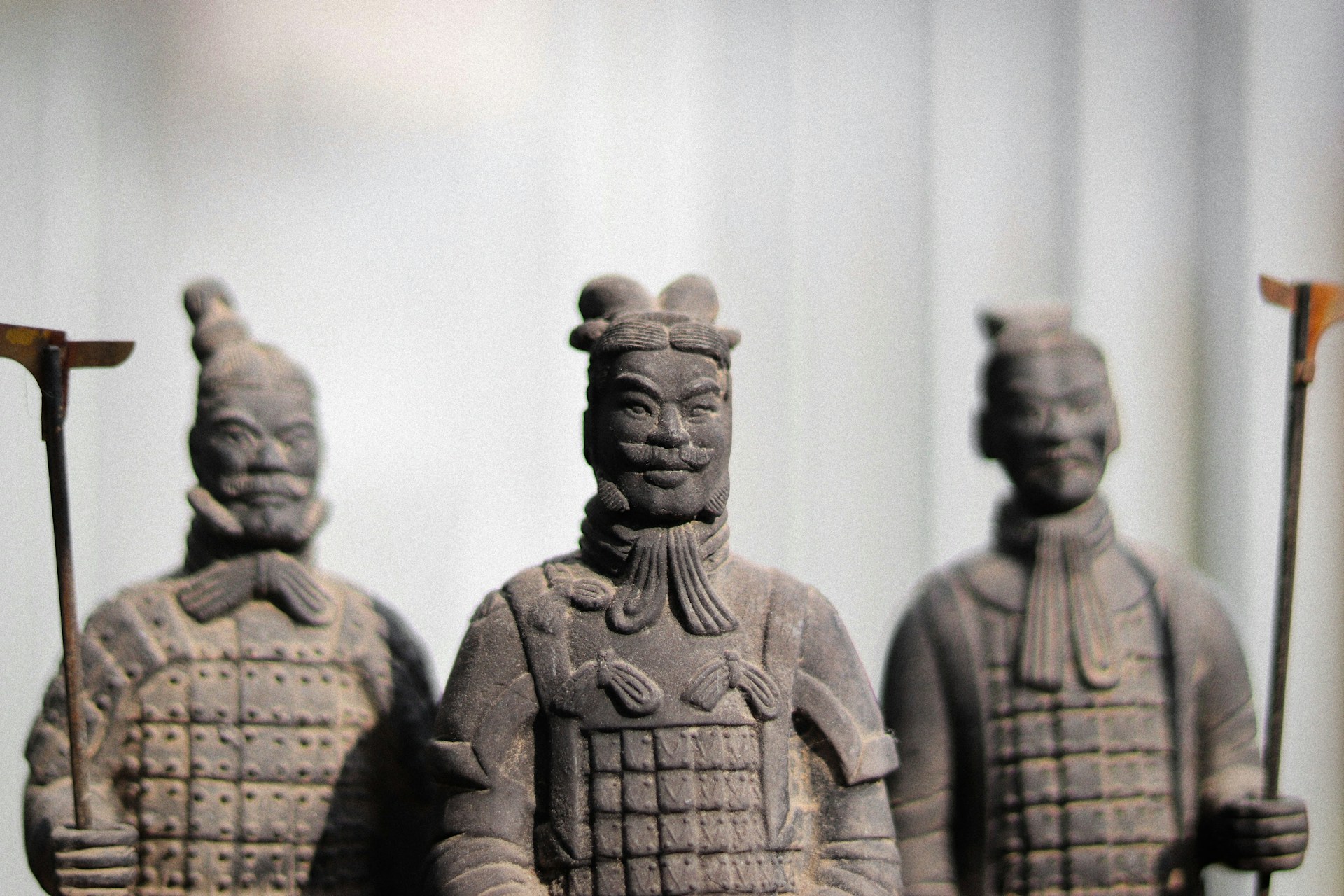
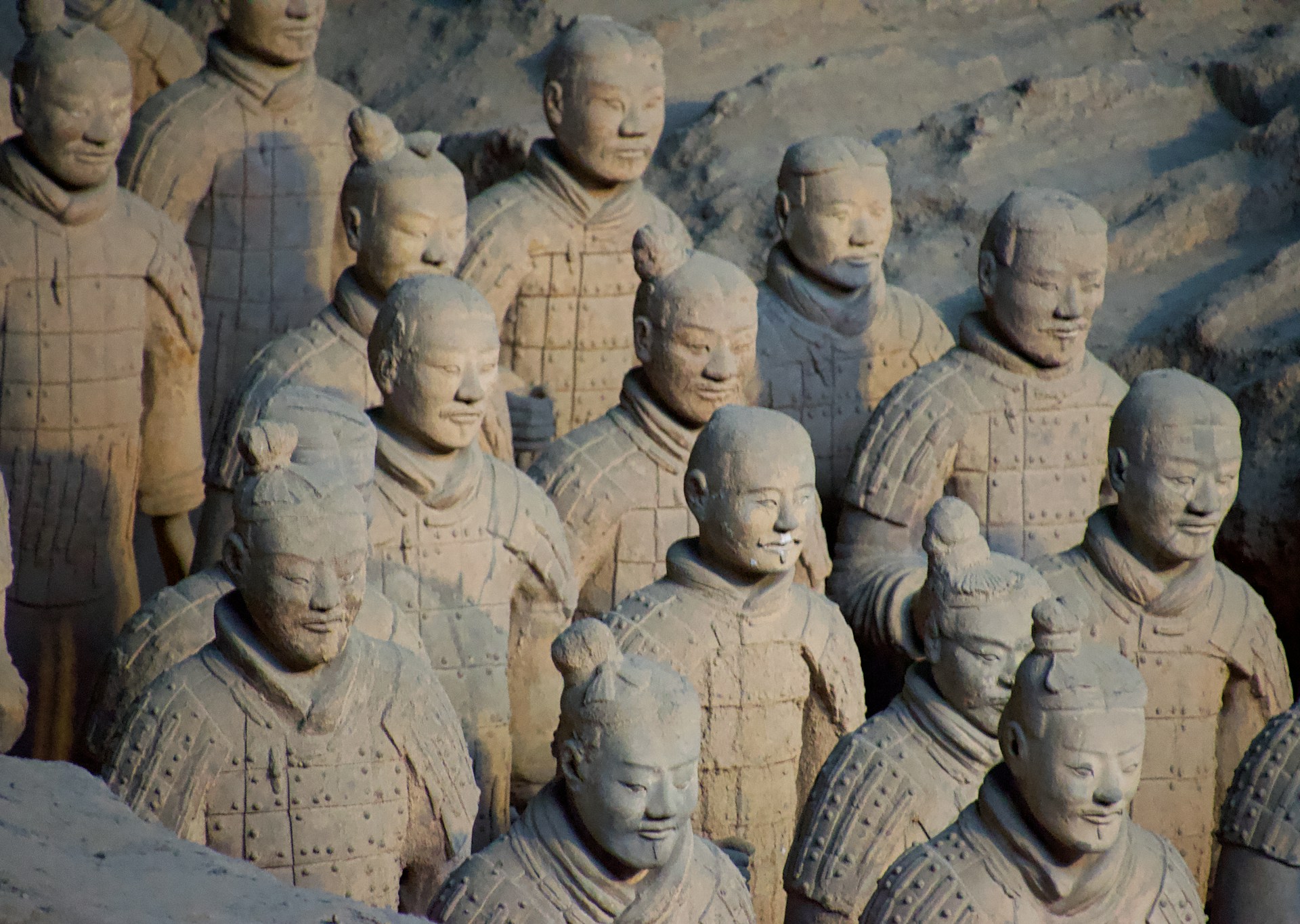
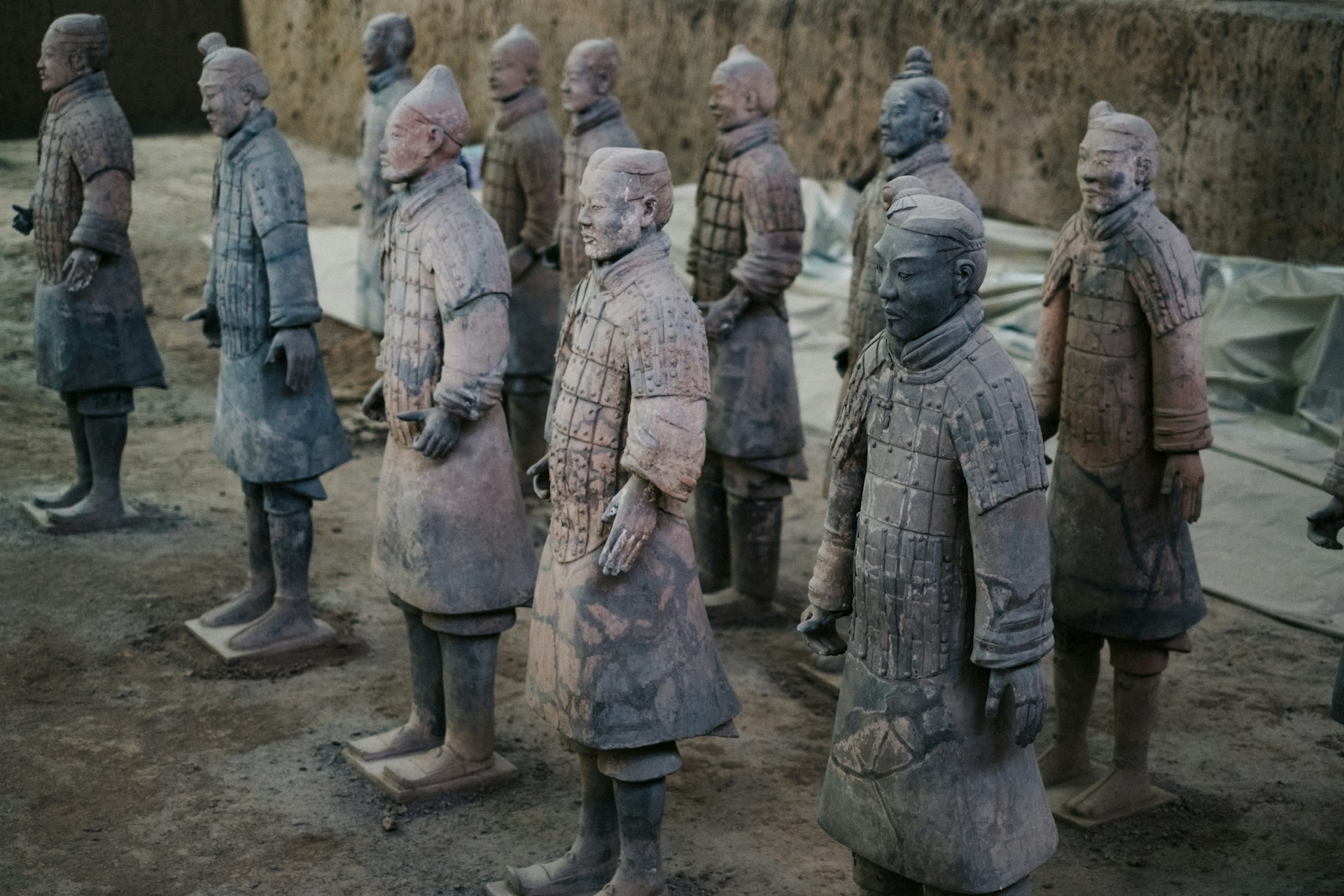
The detail that stays with everyone: no two faces are alike. Different noses, ears, mustaches and expressions — scholars believe the workshops worked from real soldiers of the Qin army. Find three faces you like and photograph them close; the full-rank shots are for the postcards, the faces are for you.
In a dim hall near the exit, two half-size bronze chariots with their horse teams — unearthed in 1980, rebuilt from thousands of parts — show the era's craftsmanship at its absolute peak. Then the shuttle takes you to the emperor's own mound: an unexcavated hill under pomegranate trees. No treasures on display, and that restraint is part of the experience.
04 · Tickets & tours
Entry uses real-name ticketing (your passport is your ticket), and most travelers pair the army with a guide or a half-day tour from Xi'an. Check availability, then browse live tour picks below.
Instant-confirmation entry tickets, real-name booking with your passport, and thousands of traveler reviews.
05 · Traveler voices
Pit 1 stopped me in my tracks. You have seen the photos a hundred times — standing there in person is a different thing entirely.
Get the audio guide or a good tour — the story is what turns rows of clay statues into something that gives you goosebumps.
Went at opening and had twenty minutes of near-quiet in Pit 1 before the coaches arrived. By eleven the halls were packed — timing is everything.
Budget half a day, not an hour. The bronze chariots and the mound round the visit out — and the faces deserve ten slow minutes each.
Quotes are condensed and paraphrased from recent Tripadvisor traveler reviews; names shortened for privacy.
06 · Field notes
Guides, itineraries and notes on the Terracotta Army and Xi'an — newest first.
📜 An Ancient Mystery Buried for 2,200 Years In 1974, a group of farmers digging a well in Lintong District, near Xi’an,…
Read more
XI’AN, Sept. 30, 2026 – The newly renovated Pit No. 2 exhibition hall at the Emperor Qinshihuang’s Mausoleum Site Museum in Xi’an,…
Read more
On Sept. 3, 2026, conservators carefully joined fragments of a clay figure at an in-situ conservation laboratory at Pit No. 1 of…
Read more
A Comprehensive Xi’an Travel Guide to the Terracotta Army and the Unopened Mausoleum When travelers from around the world plan their pilgrimage…
Read more
Seeing the 8,000-strong terracotta army standing in silent formation is a once-in-a-lifetime experience. However, sharing that experience with 50,000 other tourists wielding…
Read more
Destination: Emperor Qinshihuang’s Mausoleum Site Museum 秦始皇帝陵博物院(兵马俑)Location: Lintong District, Xi’an, Shaanxi, China Planning a trip to see the legendary Terracotta Army is…
Read more07 · Plan your visit
Getting there
The easiest option: hotel pickup, transport, a guide who brings the history alive, and often Huaqing Palace or city sights bundled in. Half-day and full-day options run daily. Compare tours on Trip.com
Public buses run from central Xi'an to the Lintong stop near the museum gate — by far the cheapest way out, though it takes longer and gets crowded. Check current route numbers before you go; they change.
Roughly an hour from downtown Xi'an, about 40 km east into Lintong District. Agree the return plan before you set off — taxi queues at the gate are long in peak season.
A perfect day
Beat the tour-coach waves — the difference between the 9am and 11am halls is night and day.
Walk the full raised corridor while it is calm. Start at the far end, work backward.
The command post, then the specialists — take the glass cases slowly.
Biángbiáng noodles and local Shaanxi fare — the region eats differently from coastal China, gloriously.
Let your eyes adjust to the dark hall, then lean in: the detail is almost absurd.
Shuttle out to the emperor's hill, stand under the pomegranate trees, and let the mystery be the ending.
Muslim Quarter for dinner and the City Wall at dusk — the perfect contrast of eras.
Typically 08:30 – 17:00 (later in peak season), with last entry well before close. Ticketing is real-name: book with your passport and bring that same passport — checks are strict.
Weekday mornings, March–May or September–November for kind weather. Avoid Golden Week and summer weekends unless crowds are part of the adventure.
Real-name entry tickets with your passport, instant confirmation and thousands of traveler reviews — on Trip.com.
08 · Good to know
Six questions every first-timer asks — answered honestly, so nothing surprises you at the gate.
Three honest ways: a guided tour (easiest — transport, guide and often Huaqing Palace bundled in), public buses from central Xi'an to Lintong (cheapest, slower), or a taxi/Didi (about an hour each way). Most first-time visitors choose the tour for the context alone. See options on Trip.com
Strongly recommended, one way or another. The pits are spectacular as pure spectacle — but the story (how they were made, why they were buried, how they burned) is what makes it unforgettable. Either book a tour with a guide or rent the audio guide at the gate; wandering unguided is the most common regret we hear.
Yes — photography is generally welcome in the pits, and the raised walkways of Pit 1 give everyone a view. Flash and tripods are typically restricted, and rules can tighten around special exhibitions. Drones are a no. Shoot wide in Pit 1, then switch to portraits of individual faces in the glass cases.
Half a day including travel: three to four hours on site if you do the pits, the bronze chariot hall and the mound properly. Rushing it in ninety minutes is possible — but the faces reward slowness, and most travelers who hurried regret it on the bus back.
Honestly: it is a quiet, tree-covered hill — nothing has been excavated, so there is nothing to "see" in the museum sense. But that is precisely why some travelers love it: the army you just met was built for the man under that mound. Go for the atmosphere and the closure of the story, not for exhibits.
Weekday mornings — be at the gate for opening. Spring and autumn bring the kindest weather; Chinese national holidays (especially Golden Week in October) bring the largest crowds of any site in China. Winter is cold but wonderfully quiet, and the halls are indoors.
One last thing
Tickets · Tours · Traveler reviews