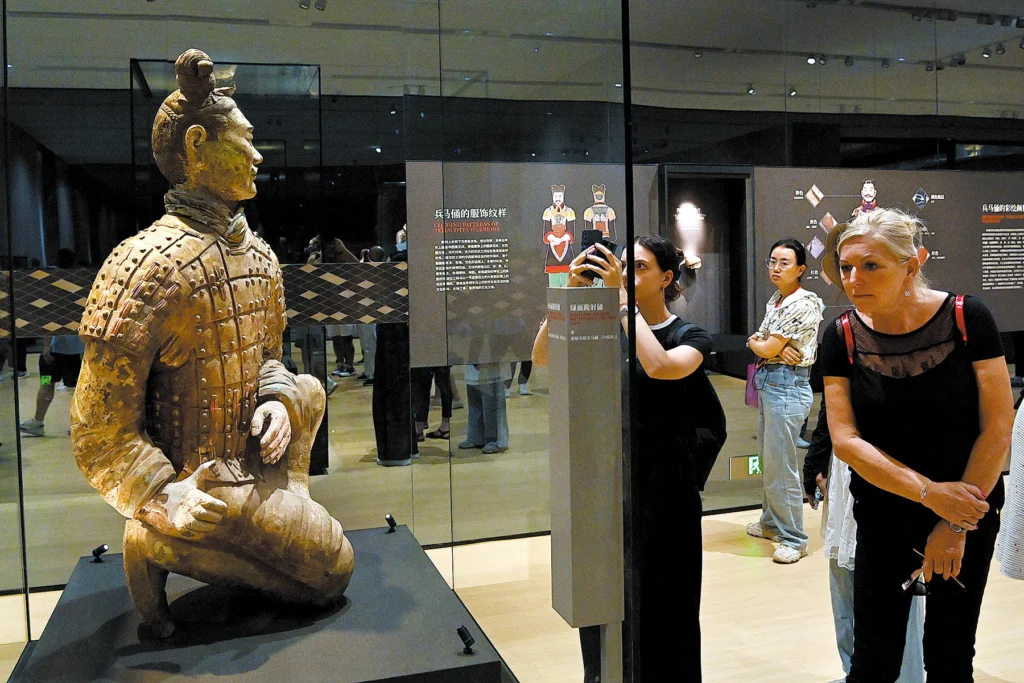
Where History Breathes, Legends Whisper, and the First Emperor Still Watches
🌄 Welcome to the Tomb of the First Emperor — A Journey Through Time
Located just 35 kilometers east of Xi’an, Emperor Qin Shi Huang’s Mausoleum Site Museum is not merely a museum — it is a living archaeological wonder, a sacred burial ground, and the epicenter of China’s imperial identity. Here, over 8,000 life-sized terracotta warriors stand guard for eternity, protecting the tomb of the man who unified China — and whose legacy still shapes the nation today.
Whether you’re a history buff, an archaeology enthusiast, or simply curious about one of humanity’s greatest discoveries, this guide will help you navigate the site with wisdom, respect, and wonder.
📖 FREQUENTLY ASKED QUESTIONS (FAQ)
❓ Q1: Is this the actual tomb of Qin Shi Huang? Can I see inside it?
A: No — the main burial chamber remains unexcavated. The museum displays the Terracotta Army pits (Pit 1, 2, and 3), which are funerary guardians, not the emperor’s body itself. The underground palace beneath the tumulus (mound) has never been opened due to preservation concerns, high mercury levels, and ancient booby traps rumored to still be active.
🔍 Fun Fact: Soil tests near the mound show mercury concentrations up to 10 times higher than normal — supporting ancient texts that describe “rivers of mercury” flowing through his subterranean kingdom.
❓ Q2: How many Terracotta Warriors are there? Are they all real?
A: Over 8,000 have been unearthed so far — but archaeologists estimate up to 10,000 may exist across all three pits. Each warrior is unique: different facial expressions, hairstyles, armor styles, even fingerprints left by sculptors. They were made from local clay, fired in kilns, then painted with vibrant pigments (now mostly faded).
🎨 Did You Know? Infrared scans reveal traces of original paint — reds, blues, greens — suggesting the army once stood in dazzling color.
❓ Q3: Why did Qin Shi Huang build such a massive tomb?
A: He believed death was merely another realm — and he intended to rule it as he ruled the living world. His tomb complex includes:
- The Terracotta Army — military protection
- Bronze chariots & horses — ceremonial transport
- Acrobats, musicians, officials — entertainment and administration
- Mercury rivers, palaces, stars — cosmic replication of his empire
He wanted to recreate his entire court underground — complete with servants, weapons, treasures, and even mechanical crossbows to deter grave robbers.
❓ Q4: What’s the difference between Pit 1, Pit 2, and Pit 3?
| Pit | Description | Highlights |
|---|---|---|
| Pit 1 | Largest and most impressive — contains over 6,000 warriors arranged in battle formation | Front-line infantry, cavalry, chariots; best photo opportunities |
| Pit 2 | More complex layout — mix of archers, cavalry, chariots, and command units | Strategic formations; rare kneeling archers; bronze weapons on display |
| Pit 3 | Smallest — likely served as the “command center” or general’s headquarters | High-ranking officers, banners, ritual objects |
📌 Pro Tip: Visit Pit 1 first — it’s the iconic view. Then explore Pits 2 and 3 for deeper context.
❓ Q5: Are there other attractions besides the Terracotta Army?
A: Absolutely! The museum grounds include:
🔹 The Bronze Chariot Exhibition Hall – Two full-size, intricately detailed bronze chariots discovered in 1980 — each weighing over 1 ton, with thousands of tiny parts. Considered masterpieces of ancient metallurgy.
🔹 The Museum of the Mausoleum – Displays artifacts found during excavations: weapons, armor, coins, jade ornaments, and even skeletal remains of laborers who built the tomb.
🔹 The Tumulus (Mound) – The giant earthen hill covering the emperor’s actual tomb. You can walk around its base — no climbing allowed. Look for the “Dragon Vein” alignment — according to feng shui, it follows the natural energy lines of the land.
🔹 The Archaeological Park & Future Excavation Zones – Ongoing digs where new warriors are occasionally uncovered. Sometimes visitors can watch live excavation via glass windows.
❓ Q6: Is the site accessible for people with mobility issues?
A: Yes — most areas are wheelchair-friendly. Ramps connect viewing platforms above the pits. Elevators are available at key points. However, some outdoor paths may be uneven. Wheelchairs can be rented at the entrance.
♿ Note: The main viewing platform above Pit 1 is elevated — consider bringing binoculars if you prefer close-up views without descending stairs.
❓ Q7: Can I take photos or videos inside?
A: Photography is allowed without flash throughout the museum. Flash photography is strictly prohibited near the warriors to protect fragile pigments. Video recording is permitted, but drones are banned.
📱 Tip: Bring a telephoto lens — you’ll want to capture facial details and weapon engravings from afar.
❓ Q8: How long should I plan to spend here?
A: Allow at least 2.5–4 hours for a thorough visit. If you’re a serious history lover or want to explore every exhibit, budget half a day.
⏳ Suggested Itinerary:
- 30 mins: Orientation + ticket purchase
- 60 mins: Pit 1 (main hall)
- 30 mins: Pit 2 & 3
- 30 mins: Bronze Chariots + Museum Exhibits
- 30 mins: Tumulus Walk + Gift Shop / Rest Area
❓ Q9: Are guided tours worth it?
A: Highly recommended, especially if you don’t speak Mandarin. English-speaking guides provide rich historical context, explain symbolism, point out hidden details (like rank indicators on armor), and share fascinating myths — including the legend of Xu Fu’s voyage to Japan.
🎧 Alternative: Rent an audio guide (available in 10+ languages) or download the official app with augmented reality features.
❓ Q10: What’s the best time to visit? Avoiding Crowds?
A: Peak season runs April–October, especially weekends and holidays like National Day (Oct 1–7). To avoid crowds:
✅ Go early morning (opens at 8:30 AM)
✅ Visit on a weekday (Tuesday–Thursday ideal)
✅ Arrive before 9 AM or after 3 PM
✅ Avoid public holidays — Chinese New Year, May Day, Golden Week
🗓️ Bonus Tip: Winter months (Dec–Feb) are quietest — though cold. Snow-covered mounds offer dramatic photo ops!
🧭 VISITOR TIPS: Make the Most of Your Trip
🎒 BEFORE YOU GO
✔️ Book Tickets Online – Use the official website or apps like WeChat/Alipay to reserve tickets ahead of time. Same-day tickets often sell out during peak seasons.
✔️ Check Opening Hours – Usually 8:30 AM – 5:30 PM (last entry at 5 PM). Closed only on Lunar New Year’s Eve.
✔️ Dress Comfortably – Wear walking shoes — lots of standing and walking. Layers recommended — indoors can be cool, outdoors warm in summer.
✔️ Bring Water & Snacks – Food options are limited inside. There’s a small cafeteria near the exit, but prices are inflated.
✔️ Download Offline Maps & Apps – Google Maps doesn’t work well in China. Use Baidu Maps or Apple Maps offline mode.
🚶♂️ ON-SITE STRATEGIES
📍 Start with Pit 1 – It’s the grandest and sets the tone. Don’t rush — look closely at faces, weapons, and ranks.
📍 Use Binoculars or Zoom Lens – Many details (facial expressions, inscriptions on weapons) are hard to see from ground level.
📍 Visit the Bronze Chariot Hall First or Last – It’s quieter and less crowded than the pits. Great for ending your visit with awe.
📍 Walk Around the Tumulus – Even if you can’t enter the tomb, circling the mound gives perspective on scale and feng shui design.
📍 Look Up! – Notice the ceiling paintings and symbolic constellations above the pits — meant to mirror the heavens.
📍 Ask Questions – Guides love explaining lesser-known facts — e.g., how warriors were assembled using molds, why some have missing arms, or how color analysis revealed their original appearance.
🛍️ SHOPPING & SOUVENIRS
🎁 Official Gift Shops – Located near exits. Sell replicas of warriors, mini chariots, books, postcards, and educational kits. Avoid street vendors selling fake “authentic” relics — many are mass-produced abroad.
💎 Special Finds:
- Miniature warrior figurines (hand-painted)
- Replicas of bronze weapons
- Calligraphy brushes shaped like spears
- Mercury-free “elixir” tea blends (humorous nod to immortality quests)
💰 Budget Tip: Prices drop significantly if you buy multiple items together — haggle politely!
🍜 FOOD & REST BREAKS
🍽️ Cafeteria Options – Basic noodles, dumplings, rice dishes. Not gourmet, but clean and filling. Vegetarian options available.
☕ Coffee & Tea Spots – Small cafes near Pit 2 offer coffee, juice, and snacks. Perfect for short breaks.
🚻 Restrooms – Clean and plentiful. Located near each pit and main exhibits.
📸 PHOTOGRAPHY HACKS
📸 Best Angles:
- Pit 1: Stand at the far end for panoramic shots
- Bronze Chariots: Shoot from low angle to emphasize size
- Tumulus: Capture sunset silhouette against sky
🌟 Hidden Gem Photo Op: Behind Pit 1, there’s a quiet overlook where few tourists go — perfect for crowd-free shots.
📲 AR Experience: Download the museum’s official app — scan QR codes near displays to see animated reconstructions of how the army looked when first buried.
🧭 TRANSPORTATION TO/FROM THE SITE
🚗 From Xi’an City Center:
- Bus 306 (Tourist Bus) – Departs from Xi’an Railway Station (¥7, ~1 hour). Most popular option.
- Taxi/Didi – ¥80–120 (~40 mins). Negotiate fare beforehand.
- Private Tour Van – Book through hotels or travel agencies — includes pickup/drop-off and guide.
🚆 Train Option: Take metro Line 9 to “Huaqingchi Station,” then transfer to shuttle bus (less direct).
✈️ From Airport: Taxi costs ¥150–200 (~1 hour). Alternatively, take airport shuttle bus to city center, then Bus 306.
⚠️ IMPORTANT REMINDERS
🚫 No Touching Artifacts – Even gloves can damage delicate surfaces.
🚫 No Drones Allowed – Strictly enforced.
🚫 No Eating Inside Pits – Only permitted in designated areas.
🔒 Bag Checks Required – Large bags must be stored in lockers (free of charge).
📢 Respect Silence Zones – Some areas encourage quiet reflection — especially near the tumulus.
🌍 Leave No Trace – Littering is frowned upon and heavily fined.
🏆 PRO TRAVELER’S SECRET: The “Underground Palace” Experience
While you can’t enter the real tomb, the museum offers a virtual reality experience called “Journey to the Afterlife” — a 10-minute immersive ride that takes you deep into the emperor’s imagined underworld, complete with mercury rivers, celestial maps, and ghostly guards.
🎟️ Cost: ¥60 extra. Worth every yuan if you’re fascinated by mythology and technology.
💬 FINAL THOUGHTS: Why This Place Changes You
Standing before the silent ranks of the Terracotta Army isn’t just sightseeing — it’s a moment of communion with history. These men weren’t statues — they were symbols of power, fear, ambition, and belief in eternity.
You’ll leave not just with photos, but with questions:
What does it mean to rule forever?
Can order justify cruelty?
How do we remember those who shaped our world — even if they terrified it?
Qin Shi Huang didn’t just build a tomb — he built a legacy that continues to echo through modern China’s politics, culture, and soul.
🗺️ NEXT STEPS: Plan Your Full Xi’an Adventure
After visiting the mausoleum, consider these nearby gems:
➡️ Xi’an City Wall – Ride a bike atop ancient ramparts
➡️ Big Wild Goose Pagoda – Buddhist temple with stunning gardens
➡️ Muslim Quarter Night Market – Street food paradise
➡️ Banpo Neolithic Village – Prehistoric settlement (great for families)
“He who dies does not die if his name lives on.”
— Ancient inscription near the tomb
Come. Witness. Remember.
Emperor Qin Shi Huang’s Mausoleum Site Museum awaits — where history stands guard, and legends breathe again.
📞 Visitor Hotline: +86-29-8139-9001
Your journey into the heart of ancient China begins here.
May your steps be guided by curiosity — and your spirit stirred by wonder.
