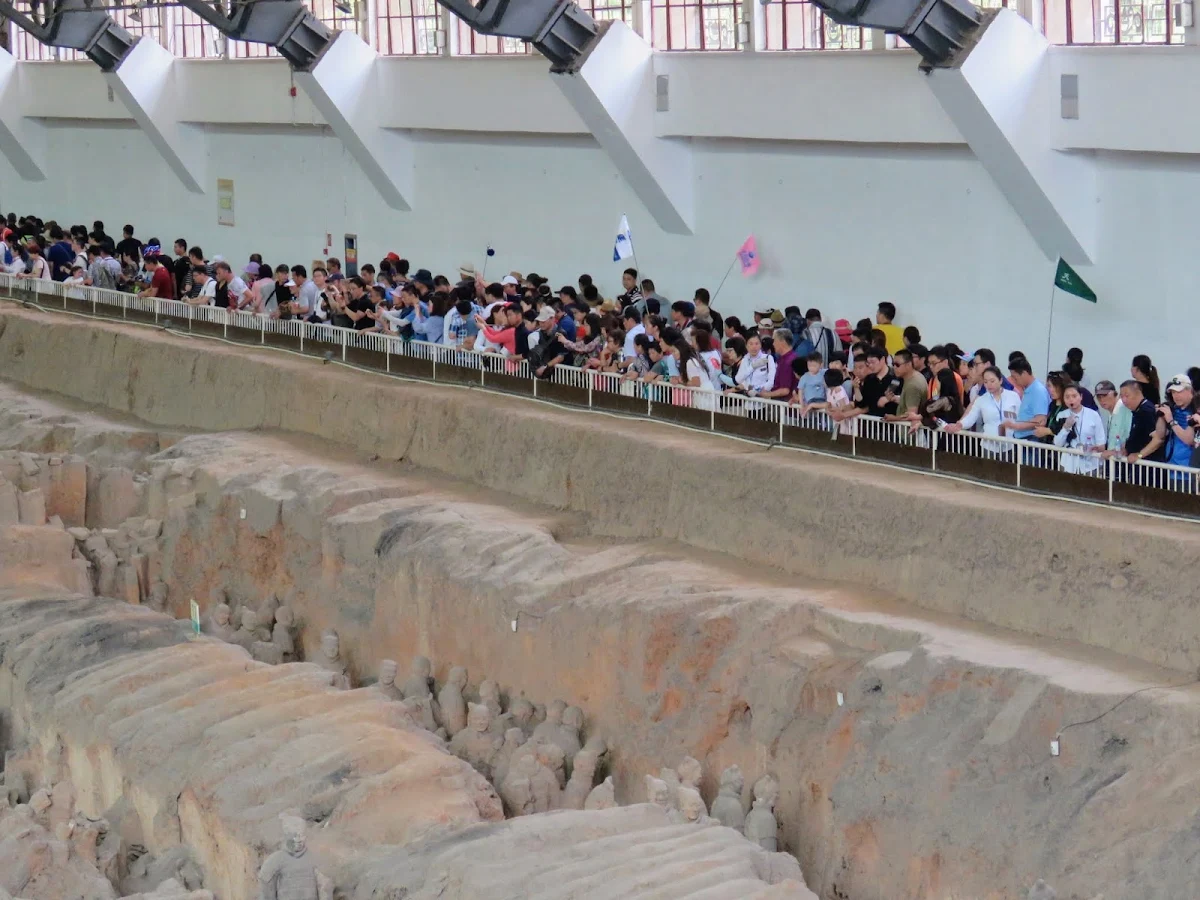
Seeing the 8,000-strong terracotta army standing in silent formation is a once-in-a-lifetime experience. However, sharing that experience with 50,000 other tourists wielding selfie sticks can quickly turn a historical marvel into a stressful endurance test.
While the official website provides excellent maps and historical context, it doesn’t teach you the street-smart strategies required to navigate the grounds. If you are planning a visit to Emperor Qinshihuang’s Mausoleum Site Museum 秦始皇帝陵博物院(兵马俑) in Lintong District, Xi’an, Shaanxi, China, mastering the art of tactical routing is the single most important thing you can do to guarantee a memorable trip.
Here is your comprehensive, insider guide to beating the massive crowds, mastering the lighting, and experiencing the Terracotta Warriors like a seasoned travel expert.
The Problem with the “Default” Route
When most visitors pass through the ticketing gates, they blindly follow the herd. Over 90% of massive domestic tour groups and first-time visitors follow the exact same chronological and geographical route: Pit 1 → Pit 2 → Pit 3.
Because Pit 1 is the largest and most famous hangar containing the main infantry army, tour guides rush their groups there immediately to “get the main photo out of the way.” The result? Between 9:30 AM and 1:00 PM, the viewing platforms of Pit 1 are a shoulder-to-shoulder sea of humanity. You will spend more time looking at the backs of other tourists’ heads than at the ancient warriors, and getting a clean photograph without a stranger’s elbow in the frame is nearly impossible.
To beat the system, you have to break the pattern.

The Reverse-Route Hack: Your Secret Weapon
The layout of the museum park is sprawling, and the distances between the pits are significant. By utilizing the Reverse-Route Hack, you can effectively walk against the tide of human traffic, enjoying quiet contemplation while the massive tour groups are bottlenecked at the main entrance.
Instead of following the crowd, do the exact opposite.
Step 1: Start at the Exhibition Hall of the Bronze Chariots and Horses or Pit 3
Upon entering the park, bypass the signs pointing to Pit 1. Head straight to the Exhibition Hall of the Bronze Chariots and Horses or Pit 3.
- Why it works: Pit 3 is the smallest of the three main pits and served as the “command center” for the terracotta army. It is highly detailed, intimate, and often completely empty in the early morning. The Bronze Chariots are masterpieces of ancient metallurgy and deserve your undivided, uncrowded attention.
- The Vibe: You will have the space to read the English plaques, examine the intricate facial expressions of the officers, and take stunning, unobstructed photos.
Step 2: Move to Pit 2
Next, make your way to Pit 2. This pit is famous for its complex military formation and features specific, highly detailed warrior types, including the famous “Kneeling Archer” and the Cavalrymen. Because Pit 2 is largely unexcavated (covered in earth to preserve the pigments), the lighting is moody, and the crowds move through it much faster than Pit 1.
Step 3: Save Pit 1 for the Grand Finale
By the time you finally reach the massive, airplane-hangar-sized Pit 1, roughly two hours will have passed.
- The Crowd Shift: The early morning tour buses that flooded Pit 1 at 9:00 AM have now cycled through and moved on to Pit 2, Pit 3, or the gift shops. The viewing platforms will have significantly thinned out.
- The Lighting Advantage: Pit 1 is illuminated by natural light from the massive windows high up in the ceiling. In the early morning, the light can be flat or create harsh shadows. By mid-to-late morning or early afternoon, the sun shifts, casting dramatic, cinematic shadows across the thousands of warriors, highlighting their armor and facial features perfectly for photography.
Mastering the Timing: Beating the “Tour Bus Wave”
Routing is only half the battle; timing is the other. The museum is located in Lintong District, which is about an hour’s drive outside of downtown Xi’an. This geographical reality creates a highly predictable phenomenon known among veteran travelers as the “Tour Bus Wave.”
The Danger Zone: 9:30 AM to 11:30 AM
Most large tour groups eat breakfast in Xi’an, board their buses around 8:00 AM, and endure the hour-long highway commute. This means a massive, concentrated wave of thousands of tourists hits the museum gates exactly between 9:30 AM and 11:30 AM. If you arrive during this window, you will be caught in the crush at the security checkpoints, the ticketing plazas, and the internal shuttle buses.
To avoid the wave, you must choose one of two tactical entry times:
Strategy A: The Early Bird (Arrive by 8:00 AM)
The gates typically open at 8:30 AM. If you can arrange transport to arrive at the visitor center by 8:00 AM, you will be among the first through the security scanners.
- The Execution: Walk briskly (or take the first internal golf cart) directly to Pit 3 or the Bronze Chariots. You will essentially have the museum to yourself for the first 45 minutes. By the time the 9:30 AM “Tour Bus Wave” arrives and floods Pit 1, you will already be peacefully viewing the command center in Pit 3.
Strategy B: The Late Afternoon Lull (Arrive after 3:00 PM)
If you prefer to sleep in or have morning activities in Xi’an, aim to arrive at the Lintong gates after 3:00 PM.
- The Execution: By 3:00 PM, the massive domestic tour groups are being corralled back onto their buses to return to Xi’an for dinner, evening shopping, or the famous Tang Dynasty Dance Show. The museum grounds become remarkably peaceful. Furthermore, the late afternoon “golden hour” sun provides the most breathtaking, warm lighting for outdoor photos of the museum grounds and the surrounding Lishan mountain backdrop.
Essential Logistics and Ground Navigation
Executing this tactical route requires a bit of physical preparation. The Mausoleum Site Museum is not just a single building; it is a massive archaeological park covering several square kilometers.
- Wear Comfortable Shoes: You will easily walk 15,000 to 20,000 steps navigating between the pits, the exhibition halls, and the exit. Leave the dress shoes at the hotel.
- Internal Shuttles: There are paid electric golf carts that ferry tourists from the main entrance to the pits. If you are doing the Reverse-Route Hack, you can use these carts to skip the long walking paths between Pit 3 and Pit 1, saving your energy for exploring the exhibits.
- The Emperor’s Actual Tomb: Many tourists don’t realize that the Terracotta Warriors are just the outer garrison. The actual, unexcavated tomb of Emperor Qin Shi Huang is located about 1.5 kilometers away in Lishan Garden. It looks like a massive, forested hill. If you have the stamina and an extra hour, a free internal shuttle will take you there. It is incredibly peaceful, heavily wooded, and entirely devoid of the massive crowds found at the warrior pits.
Official Museum Information
Before executing your tactical route, ensure your entry tickets are booked in advance via the official channels, as daily visitor caps are strictly enforced.
Emperor Qinshihuang’s Mausoleum Site Museum 秦始皇帝陵博物院(兵马俑)
- Address: Lintong District, Xi’an, Shaanxi, China
- Official Website: https://qinshihuangmuseum.com
- Telephone: +86-29-81399127
Insider Note: If you have specific accessibility needs, require a wheelchair, or need to verify last-minute gate opening times due to seasonal changes or extreme weather, calling the official telephone number provided above during Chinese business hours is the most reliable way to get accurate, on-the-ground information.
Frequently Asked Questions (FAQ)
Q: Do I need to hire a guide to understand the Reverse-Route? A: No. The museum features excellent bilingual (English/Chinese) signage, and you can rent official audio guides or use smartphone app guides at the entrance. If you do hire a human guide, explicitly tell them you want to do the “Reverse Route” starting at Pit 3. A good guide will happily accommodate this to give you a better experience.
Q: Are there food and drink options inside the museum park? A: Yes, there are small kiosks and cafes near the main visitor center and between the pits, but they are heavily marked up in price. It is highly recommended to bring your own bottled water and light snacks in your backpack to maintain your energy during your 3-to-4-hour tactical tour.
Q: Is flash photography allowed in the pits? A: No. Flash photography is strictly prohibited to protect the fragile, remaining pigments on the terracotta figures and the bronze artifacts. Ensure your flash is disabled before you enter the exhibition halls.
Q: What is the best time of year to visit to avoid crowds? A: To avoid the absolute peak crowds, avoid Chinese National Holidays (specifically the first week of October and the Spring Festival in January/February). The best times for low crowds and pleasant weather are late March to May, and September to early November.
Final Thought: The Terracotta Army was built to protect an Emperor in the afterlife, designed to be an awe-inspiring, solemn force. By utilizing the Reverse-Route Hack and timing your arrival to dodge the Tour Bus Wave, you strip away the modern chaos and allow yourself to experience the profound, silent majesty of Qin Shi Huang’s eternal guard exactly as it was meant to be seen.
