A Comprehensive Xi’an Travel Guide to the Terracotta Army and the Unopened Mausoleum
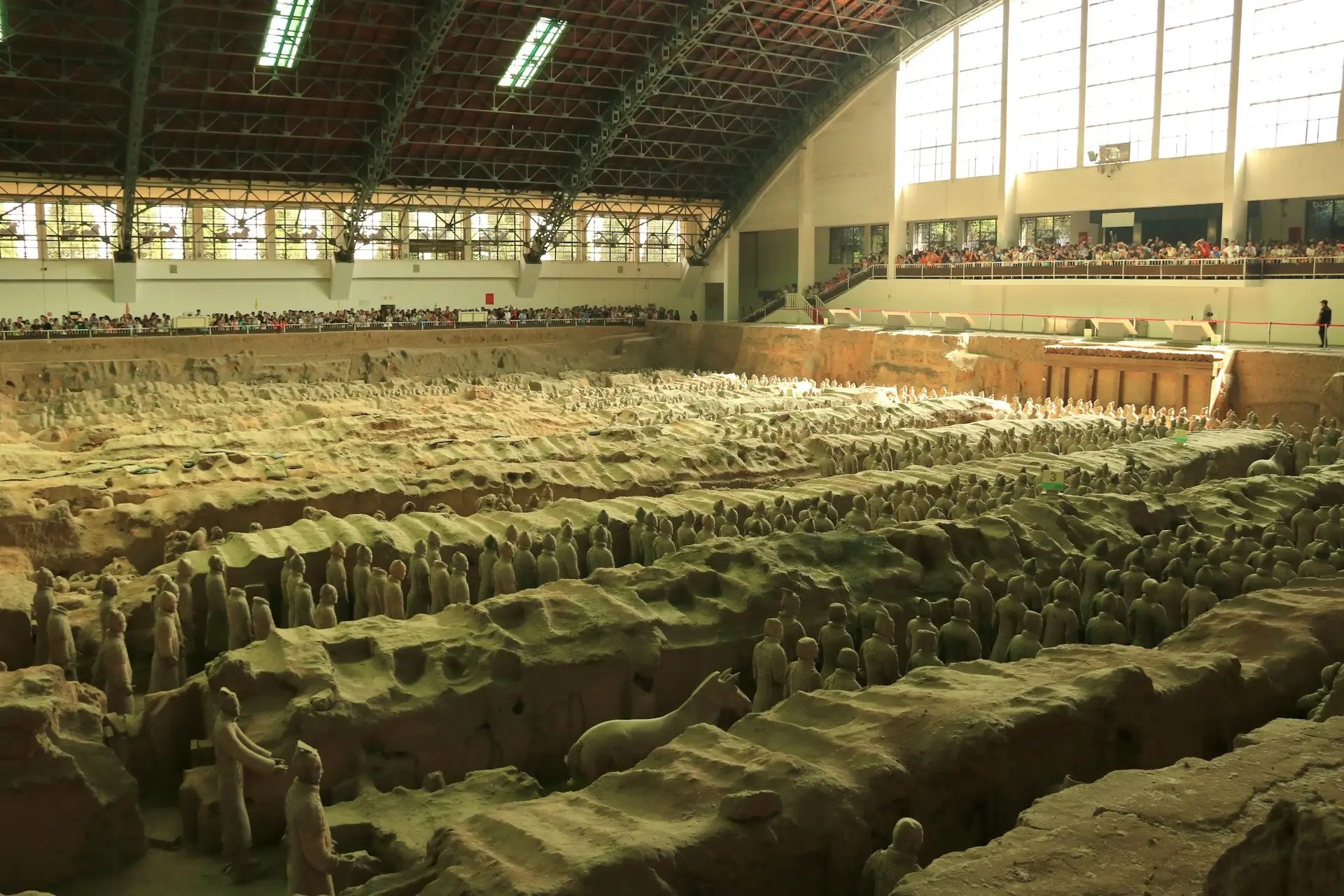
When travelers from around the world plan their pilgrimage to Xi’an, Shaanxi, they are usually chasing one iconic image: the breathtaking, subterranean army of the First Emperor. However, a massive geographical and historical misconception plagues nearly every first-time visitor.
Most tourists assume that the famous Terracotta Warriors are buried inside the actual tomb of Emperor Qin Shi Huang. When they arrive at the sprawling museum complex, look around, and don’t see a giant pyramid or an underground palace, confusion sets in.
If you are visiting or staying near Emperor Qinshihuang’s Mausoleum Site Museum 秦始皇帝陵博物院(兵马俑) in Lintong District, understanding the true layout of this ancient necropolis is the key to unlocking the real magic of the site. Here is the unvarnished, on-the-ground truth about the Emperor’s Tomb, the mercury-soaked earth, and whether you should actually add the burial mound to your itinerary.
The Great Misconception: The Army vs. The Emperor
To understand the site, you must first understand ancient Chinese military strategy. The Terracotta Warriors are not the main event; they are merely the outer perimeter defense.
The actual tomb of Qin Shi Huang is located about 1.5 kilometers (roughly 1 mile) east of the Terracotta Warrior pits. The warriors were positioned as an eternal “garrison” to protect the Emperor’s spirit from the conquered states of the east.
When you buy a ticket to the Mausoleum Site Museum, you are actually buying entry to a massive, 56-square-kilometer archaeological park. The famous Pits 1, 2, and 3 are just a tiny fraction of the outer necropolis. The true heart of the complex—the Emperor’s actual burial chamber—lies beneath a completely different landmark.
The Reality: A Forest-Covered Mountain
If you are looking for the Emperor’s tomb, you shouldn’t be looking for a building; you should be looking for a mountain.
The actual mausoleum is a massive, man-made earthen tumulus (a burial mound). Over the last 2,200 years, nature has reclaimed the structure. Today, it looks exactly like a natural, forest-covered hill rising above the Lintong landscape. Locals and historians refer to the area surrounding the mound as Lishan Garden.
There are no grand stone gates, no open staircases leading down into the earth, and no glass floors allowing you to peek into the burial chamber. There is only a quiet, heavily wooded hill, a solitary stone marker, and the profound, heavy knowledge that one of the most powerful men in human history lies completely undisturbed beneath your feet.
Why Hasn’t the Tomb Been Excavated?
The most common question asked by tourists standing at the base of the mound is: “Why don’t they just dig it up?”
The decision to leave the tomb sealed is rooted in strict archaeological ethics, profound respect for the dead, and staggering scientific dangers.
1. The Preservation Crisis (The Fading Colors)
When archaeologists first excavated the Terracotta Warriors in the 1970s, they were devastated to watch the vibrant, hand-painted colors (reds, blues, and purples) curl off the clay and turn to grey dust within minutes of being exposed to the dry modern air. We currently do not possess the conservation technology to guarantee that the silk, paintings, and delicate artifacts inside the main tomb chamber would survive contact with the modern atmosphere. Until science catches up, the tomb remains sealed to protect its contents.
2. The Rivers of Mercury
According to the ancient Han dynasty historian Sima Qian, the Emperor’s burial chamber is a microcosm of the universe. The ceiling is studded with pearls representing the stars, and the floor features flowing rivers and oceans made of liquid mercury.
For centuries, historians thought this was a myth. However, modern ground-penetrating radar and soil probes conducted around the tomb mound have revealed alarmingly high concentrations of mercury in the soil—levels significantly higher than the surrounding earth. Opening the tomb could not only destroy the artifacts but also release toxic mercury vapor into the air, posing a severe hazard to archaeologists and the millions of tourists who visit Lintong District every year.
Should You Visit the Tomb Mound (Lishan Garden)?
This is where the official map fails to set proper expectations. Most large, organized tour buses skip the actual tomb mound entirely, focusing solely on the visually spectacular Warrior pits.
Should you take the local shuttle from the Warrior pits over to the tomb mound? Here is the honest, field-tested breakdown:
Skip It If:
- You are short on time: If you only have 3 to 4 hours for your entire museum visit, spend 100% of your time at the Terracotta Pits and the Bronze Chariot Exhibition Hall.
- You expect an “underground palace”: If you are expecting to walk down into a lavish, illuminated tomb filled with gold and artifacts (like Tutankhamun’s tomb in Egypt), you will be deeply disappointed.
- You have mobility issues: The mound is steep, the paths are uneven, and it requires a strenuous hike to reach the top.
Visit It If:
- You are a hardcore history buff: There is a deeply moving, almost eerie atmosphere to standing on the unexcavated grounds of the First Emperor. Knowing what lies beneath the soil makes the quiet forest feel incredibly significant.
- You want to escape the crowds: While Pit 1 is a shoulder-to-shoulder sea of selfie sticks, the tomb mound is usually serene, shaded by ancient trees, and populated only by a few quiet travelers and local hikers.
- You want the panoramic view: Hiking to the top of the tumulus offers a fantastic, elevated vantage point of the entire Lintong District and the distant Lishan mountains.
Logistics: If you decide to go, there are free or low-cost internal shuttle buses that run continuously between the Terracotta Warrior exit gates and the Lishan Garden (Tomb Mound) entrance. The hike to the top and back takes about 1 to 1.5 hours.
Official Museum Information & Verification
To ensure a smooth visit, always rely on official channels for ticketing, shuttle schedules, and site maps. Do not buy “tomb access” tickets from unauthorized touts outside the gates; the tomb mound is included in your standard Mausoleum Site Museum entry ticket.
Emperor Qinshihuang’s Mausoleum Site Museum 秦始皇帝陵博物院(兵马俑)
- Address: Lintong District, Xi’an, Shaanxi, China
- Official Website: https://qinshihuangmuseum.com
- Telephone: +86-29-81399127
Traveler Tip: If you are staying overnight in Lintong District to beat the morning crowds, you can easily take a local taxi or Didi (ride-hailing app) directly to the Lishan Garden entrance first thing in the morning, enjoying the misty, quiet hike up the Emperor’s tomb before heading over to the Warrior pits when they open.
Frequently Asked Questions (FAQ)
Q: Can I go inside the Emperor’s actual tomb? A: No. The central burial chamber is hermetically sealed and strictly off-limits to everyone, including top government officials and lead archaeologists. It will likely remain unopened for decades, if not centuries.
Q: Is the mercury in the tomb really dangerous? A: Yes. Modern scientific soil testing has confirmed Sima Qian’s ancient texts. The high levels of mercury in the groundwater and soil around the mound act as both a toxic booby trap from antiquity and a modern environmental hazard, reinforcing the decision to keep the tomb sealed.
Q: How long does it take to walk between the Terracotta Warriors and the Tomb Mound? A: They are about 1.5 kilometers apart. While you can walk it, it is highly recommended to take the internal museum shuttle bus, as the route involves walking along busy service roads and will tire your legs out before you even begin the hike up the mound.
Q: Are there other unexcavated pits around the museum? A: Yes! The 56-square-kilometer necropolis contains hundreds of unexcavated companion pits. Archaeologists have found the remains of royal stables, armoreries, and even the graves of the Emperor’s concubines and laborers scattered throughout the surrounding farmlands and orchards of Lintong.
The Final Takeaway The Terracotta Warriors are the Emperor’s shield; the forested hill of Lishan Garden is his sanctuary. By understanding the difference between the two, you elevate your trip from a simple sightseeing tour to a profound exploration of ancient Chinese cosmology, power, and the modern ethics of archaeological preservation. Plan your routing wisely, respect the sealed earth, and enjoy the incredible legacy of Qin Shi Huang.
